
Lancaster Sources for Past Residents
The record trail for previous residents of a Lancaster address changes with the era. A current parcel and a modern deed offer a starting reference. Earlier ownership moves through microfilm and archival deed books. Historical directories and census sources add household evidence, while maps and permits help test whether the address or building is the same one. Start with the most recent dated record and move to the earlier source that actually covers the next gap.
Ownership and occupancy are not interchangeable. A recorded transfer identifies legal parties to a transaction. A directory can connect a person to an address at publication time. Census material adds household context, but it must be paired with the nearest directory year and the physical property trail. Keep a short research ledger with the date, source, reference, address form, and uncertainty for every result.
| Source | Years It Covers | Where Held | What It Shows |
|---|---|---|---|
| Recorder deed web index | 1981-present | Recorder Document Search and Copies | Modern grantor, grantee, and document path. |
| Recorder deed microfilm | 1808-1980 | Recorder counter | Bridge from the web era to older deed books. |
| Archives deeds and indexes | 1729-1980 | Lancaster County Archives | Long grantor/grantee and deed-book trail. |
| Digitized City and County directories | 1843-1922 | PowerLibrary via LancasterHistory | Historical address listings and occupancy clues, not title. |
| Local census access | 1790-1930 | Lancaster Public Library and LancasterHistory | Household names, ages, relationships, and own/rent indicators. |
| Historic permit books | 1896-1922 | City Codes / Planning | Permit recipient, date, address, fee, and work summary. |
Four Lancaster Deed Eras
Lancaster deeds began recording on May 10, 1729, yet the access route is not one continuous web database. The Recorder’s online search covers recorded deeds from 1981 forward. Its microfilm reaches 1808 through 1980. County Archives has deeds and deed-index books from 1729 through 1980. LancasterHistory adds grantor/grantee index microfilm from 1729 through 1894 and deed-book microfilm for 1729 through 1894 and 1935 through 1958.
The Lancaster County Archives provides the long-record fallback when the web index reaches its limit.
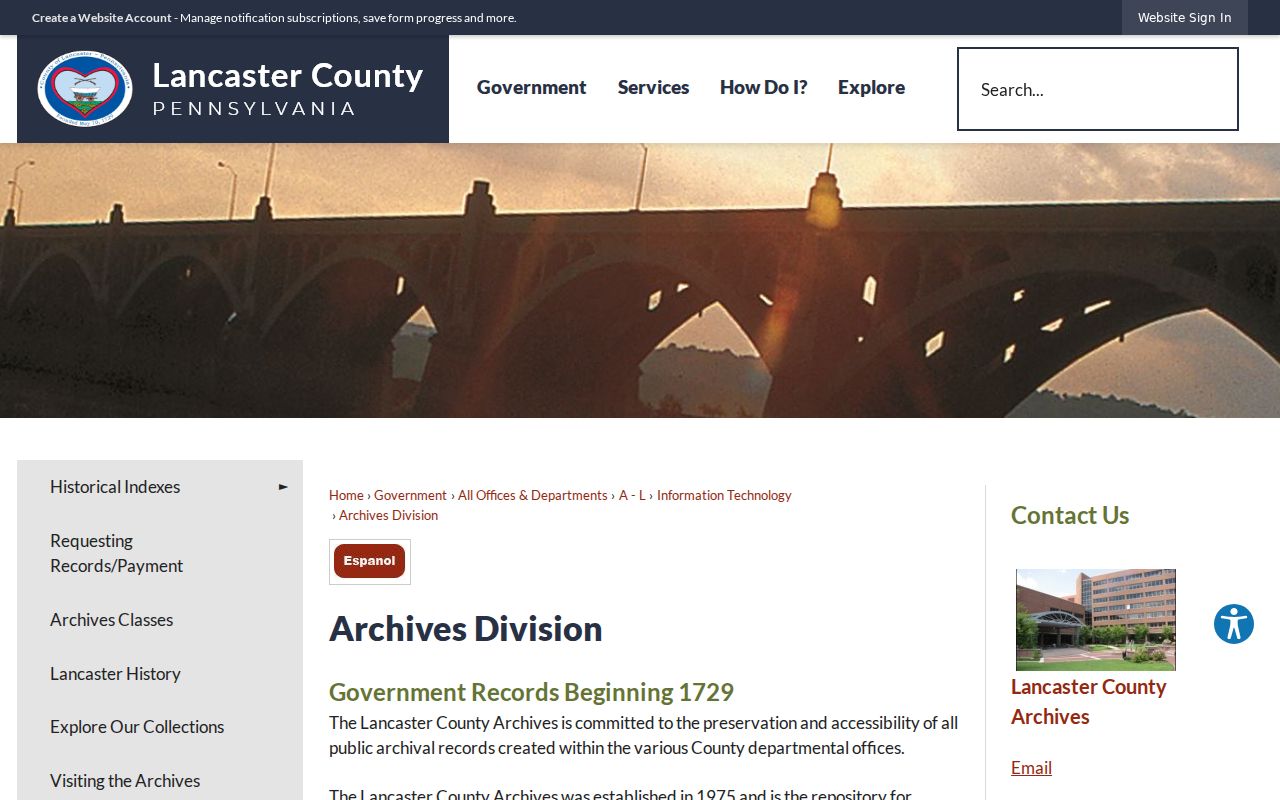
Archives requests are most useful when they identify a person, timeframe, record type, and index or book reference. The staff can check available indexes for a specific period but does not undertake broad historical research. That makes a documented last deed or a dated directory listing an important handoff point.
Trace Lancaster Deed Chains Backward
A chain of title is the ownership trail, not a roster of previous residents. Begin with today’s assessed property reference or the most reliable current deed. In the Recorder index, find the current transfer and record both the deed date and recording date. The grantor is the seller in that transfer. To step backward, search that seller as the grantee in the earlier purchase, then repeat with the prior deed’s legal description and book/page or document reference.
The City house-history guide advises recording party residences, price, bounding streets or alleys, acreage or frontage, building language, and the cited prior deed. Compare the wording from deed to deed. A lot can stay the same after a structure is demolished or replaced, and a recording can occur later than the underlying transaction.
- Use the County Property Tax Inquiry or known title paperwork to record the parcel, situs address, municipality, assessed-owner field, and deed reference.
- Search the present owner or deed reference in the Recorder document index and capture the parties, instrument, recording date, and book/page or document number.
- Read the seller as the grantee in the prior transfer, using the legal description and prior-deed citation to avoid a same-name mismatch.
- Repeat the sequence backward and keep each deed date separate from its recording date.
- Move to Recorder microfilm, County Archives, or LancasterHistory when the needed transfer predates the online coverage.
- Grantor / grantee
- The grantor transfers an interest; the grantee receives it in the recorded instrument.
- Chain of title
- The documented sequence of transfers used to follow an interest in the same property backward.
- Legal description
- The deed’s land-identification language, often more durable than a street number in old records.
- Criss-cross directory
- A directory arranged or cross-referenced by address and surname for tracing historical listings.
Lancaster Deed Clues and Gaps
A historic deed can supply more than a buyer and seller. It may name party residences, price, neighboring streets or alleys, acreage, frontage, a prior-deed citation, and building words such as dwelling, barn, stable, shed, or other structure. Those details help distinguish a transfer of a specific building from a transfer of land that later changed. They also help bridge early property descriptions to a later street address.
Do not force an unbroken chain. Lancaster’s guide cautions that deeds could be recorded late or not recorded at all, and unrecorded-deed index books exist. A missing owner can lead to a will, probate file, mortgage satisfaction, court record, subdivision shift, or map evidence. Mark the break and seek a corroborating record rather than assigning a past household from a name alone.
Lancaster Inheritance Without a Sale
When a person disappears from the Lancaster deed trail, an inheritance may have moved the property without a normal sale. LancasterHistory’s will index covers 1729 through 1947, and County Archives holds original wills beginning in 1730, including originals from 1730 through 1915. Estate inventories and inventory indexes can add household possessions, room sequence, or economic context, though they do not necessarily give a full street address.
The Lancaster Register of Wills is the County office for estates, inheritance-tax records, guardianships, and marriage licenses.
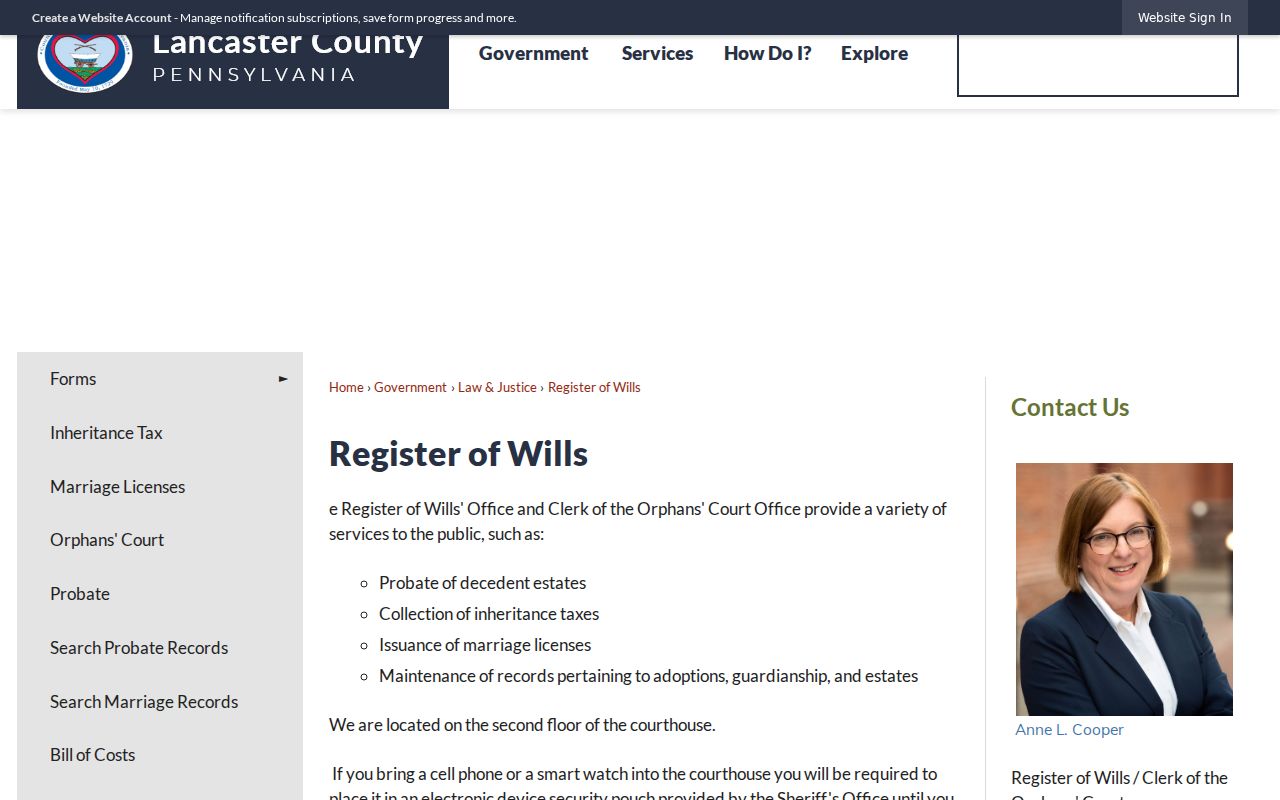
Estate material can explain why a property changes hands without a deed sale, but it should remain tied to the parcel, legal description, and dated record trail. The Register of Wills maintains the underlying County route; older material may be held through County Archives or LancasterHistory.
Lancaster Addresses Need Context
Previous residents research in Lancaster benefits from the City’s early grid, but it also has an address-continuity trap. James Hamilton’s 1730 plan used eight rectangular lots per block with rear alleys. Deeds can therefore use lot numbers, bounding streets, alleys, or neighbors where a later record uses a number. Early directories may give only a corner. A modern number should not be assumed to have existed in an early volume.
Use the block, corner, lot, deed bounds, alley reference, and a dated map or atlas to connect the forms. The City guide documents no verified citywide renumbering date, so a claimed renumbering should not be used as a shortcut. A sudden tax-value increase can suggest change, but it can also reflect reassessment or inflation and needs a map, permit, deed, or newspaper check.
Lancaster Households in Directories and Census
Previous residents are often easier to spot in a directory or census than in a deed, but the evidence means something different. Lancaster City and County directories from 1843 through 1922 are searchable or browsable in PowerLibrary through LancasterHistory. The City guide describes them as street-address organized and cross-referenced by last name. A listing can connect a name to an address, show a vacancy clue, or preserve a spelling, but it does not establish ownership or every person in a home.
Lancaster Public Library keeps local-history city-directory and census microfilm from 1790 through 1930. Pair a directory with the nearest census year, then compare the address, spelling, neighbors, and property records. The collection details are available through the Lancaster city directories; for one address, the practical aim is a dated household trail rather than a broad name search.
- Start with a dated directory listing or the address form found in a deed.
- Read the street and surname paths, including nearby entries, corners, and any vacancy notation.
- Search the adjacent directory year when the name vanishes or the address changes form.
- Pair the closest available census year with that address and retain the household details as corroboration, not proof by itself.
- Use a deed, map, tax record, newspaper, or probate item to explain a move, transfer, or unexplained gap.
Lawful use. Lancaster house-history research is for personal, family, estate, or historical work, never for tracking, harassing, intimidating, or exposing a living person.
Lancaster Maps, Permits, and Newspapers
Maps can anchor a changing address to a physical place. LancasterHistory holds the documented 1842 county map, 1858 City map, 1864 atlas, 1874 City map, 1875 atlas, 1886 City atlas, and 1899 surveys, plus Sanborn fire-insurance maps. These materials can bridge a corner description to a number, show a building’s first appearance, identify a block-level owner name in some atlases, or reveal that the earlier structure no longer stands.
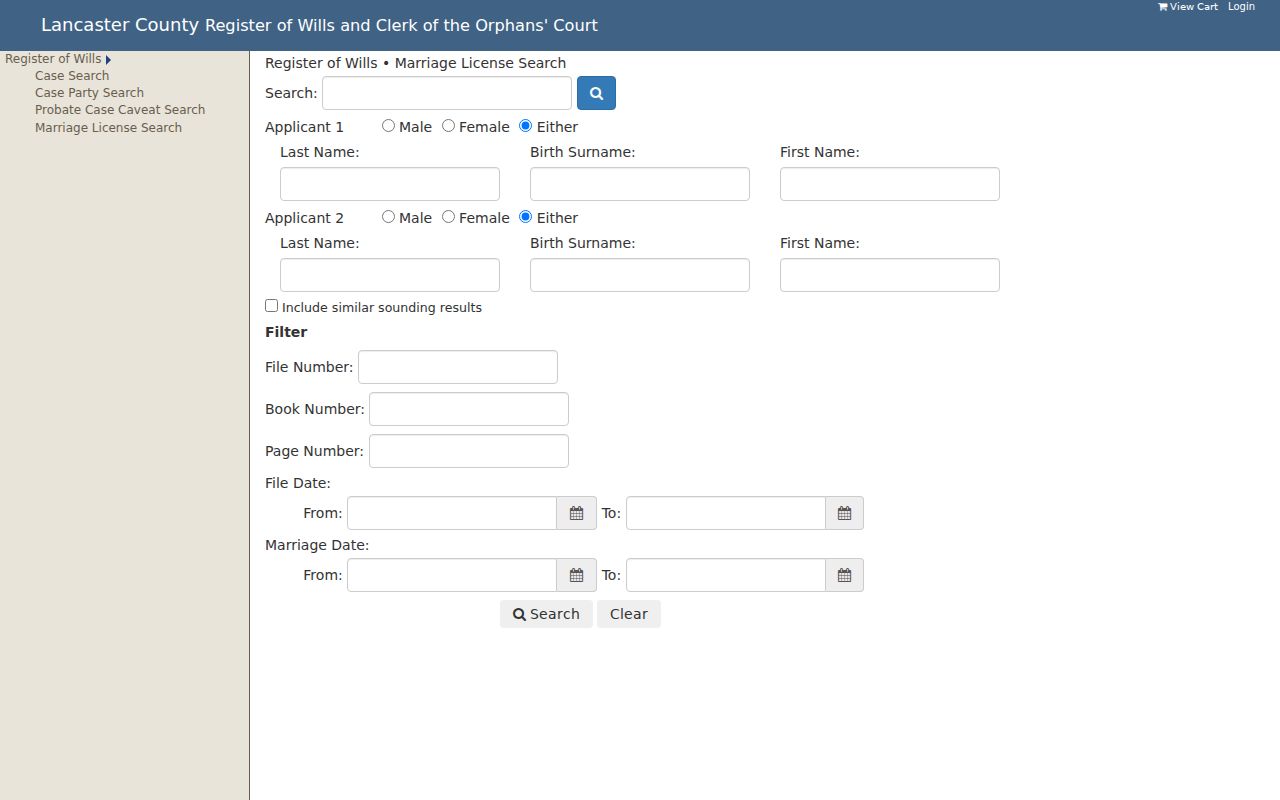
The City’s historic permit books are chronological and gapped, not online or indexed by name or address. The County marriage-license entry is another dated family-record route that may help establish a household timeline when a lawful, relevant record exists.
After an address and date are established, LancasterHistory’s digitized newspapers can add obituaries, estate notices, sheriff sales, fire reports, sale advertisements, or building evidence. Its copy service accepts tightly identified historical requests, including a known name, place, date, and object reference when available. Note: an obituary request requires a date of death, and early obituary coverage is uncommon.