
Lancaster Resident Lookup Coverage
A one-person search is not a single official database. The County assessment record can confirm an assessed owner and parcel, but it cannot establish current occupancy. A deed identifies parties to a transfer and dates. UJS can provide a public docket trail, while historical vital indexes establish an event only after the applicable public-access threshold. Select the record from the question asked, then preserve the source, search date, and exact spelling before comparing results.
| Record | What It Confirms | Where | Access |
|---|---|---|---|
| Assessment parcel card | Assessed owner, parcel, site, and recorded mailing field | Lancaster County Property Tax Inquiry | Current public portal; ownership is not occupancy proof. |
| Recorded deed | Buyer/seller roles, legal property identity, dates, and prior references | Recorder document search | Web index from 1981; earlier material follows other channels. |
| Public docket | Party role, case number, category, event dates, and published status | UJS Case Search | Free public docket service with protected matters omitted. |
| Vital or estate record | Event, relationship, estate, or historical timeline evidence | Register of Wills or state channels | Access depends on record type, date, and eligibility. |
Begin with the parcel route only when ownership is the question. Use a court docket to separate similar names, and use an estate or historical index for a decedent or family-history question. A license or business filing can show an official affiliation, but neither one establishes a home address.
Lancaster's Property Tax Inquiry supports owner-name, site-address or range, parcel or account, municipality, property-class, land-use, sale, construction, and square-footage criteria. A city address needs its correct ward or annex setting because the results distinguish City Wards 1 through 9, annex codes, and surrounding municipalities. Record that jurisdiction with the parcel. It helps keep a City of Lancaster property from being confused with a County mailing address that uses Lancaster as its postal place name.
Lancaster Court Docket Search
UJS Case Search is the free statewide starting point for a Lancaster County docket. Start with a participant last name, first name if needed, and Lancaster County. The form also offers docket number, filing-date range, court office, case category, status, participant role, and property-related criteria. Adding every known fact at once can hide a valid result, so use the lightest name-and-county search first, then add one careful filter.
| Visible field | How it helps a Lancaster lookup |
|---|---|
| Participant name | Starts a party search without assuming the name is unique. |
| County and court office | Narrows a statewide result to Lancaster County or a named local court. |
| Docket type, category, status | Separates unlike matters after an initial match is found. |
| Address, parcel, city, ZIP, or municipality | Supports property-related criteria when the selected mode offers them. |
A published docket can include the docket number, court, participant names and roles, filing events, dates, issue or charge, disposition, financial entries, and assigned judge or office. It is not a complete identity record. Juvenile, expunged, limited-access, and other protected material may not appear, and newly entered items can lag behind filing.
- Docket number and court: the case identifier and court that issued the published docket.
- Participants and roles: the party names and their role in the published matter.
- Events and status: filed dates, docket events, category, disposition, and current published status.
- Financial and court details: entries, judge, court office, and linked public docket detail where released.
The portal points to a docket, not necessarily every underlying file. Lancaster's Prothonotary retains civil filings such as complaints, judgments, liens, divorce, custody, name changes, and naturalization. The Clerk of Courts maintains criminal and juvenile Common Pleas filings subject to public-access limits. The Register of Wills and Orphans' Court holds estate, guardianship, adoption, and marriage material. Ask the office that owns the type of file identified by the result.
Confirming One Lancaster Resident
Use the same-name method before treating a result as a match. Keep the source spelling exactly as returned, including initials and suffixes. Then compare two independent fields. A deed party can be checked against a parcel and a recorded date; an estate name can be compared with an obituary date and probate file; a public docket can be narrowed by County, role, and event dates. If records share only a name, leave the match unconfirmed.
- Search the County Property Tax Inquiry when a person may own property, and record the parcel, situs address, and mailing field separately.
- Use the parcel or deed reference in the Recorder index to confirm the party role, recording date, and legal-property connection.
- Run a minimal participant search in UJS with Lancaster County selected, then compare the docket details with the independent property record.
- For an historical event, request the right vital, estate, or archival record from its custodian rather than asking a general office to disclose restricted details.
- Docket
- A court's running case record, identified by a docket number and listing published case events.
- Index and image
- An index points to a record. An image is the scanned or viewable document itself, which may have different access rules.
- Certified copy
- A copy issued and certified by the record custodian for a purpose that requires its official certification.
Note: A mailbox or assessment mailing address is a correspondence field and should never be treated as proof that a person lives at the parcel.
Lancaster Vital Record Routes
Pennsylvania birth and death certificates from 1906 forward belong to the state Division of Vital Records. Recent certified copies are limited to eligible applicants. Older public research follows a different route: birth records become public after 105 years and death records after 50 years through the Pennsylvania State Archives. Lancaster marriage licenses belong with the Register of Wills, while divorce files remain with the County Prothonotary and Court of Common Pleas.
The Pennsylvania birth-certificate page shows the official application route used when eligibility and a recent certified copy are required.
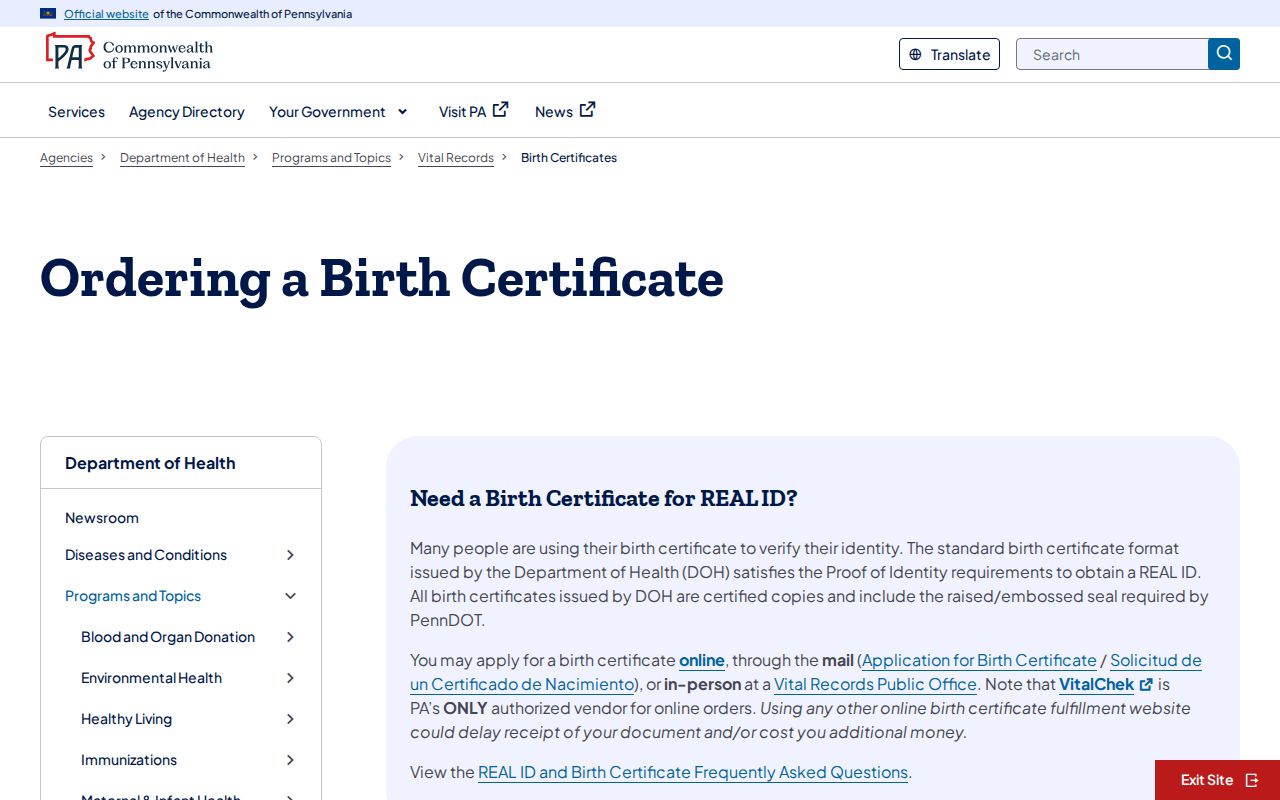
The screen is a reminder that an official application is not a public name-search tool. For earlier Lancaster events, use the archival time threshold and the appropriate historical custodian instead.
For an adoption or birth-family question, the Pennsylvania Adoption Information Registry is the official voluntary route for authorized contact and medical or social-history information. It does not bypass confidential adoption records. That boundary protects everyone involved and makes a resident lookup an inappropriate substitute for the registry process.
Lancaster Custody Record Checks
Custody and registry tools answer narrow public-safety questions. They should not be used to make a broad identity claim. The County prison locator concerns current County custody. The state locator concerns people under Department of Corrections jurisdiction or departmental supervision, not County, federal, or other-state custody. The state registry has its own terms and public-protection purpose.
The Lancaster County Prison public inmate search is the current County-custody entry point.
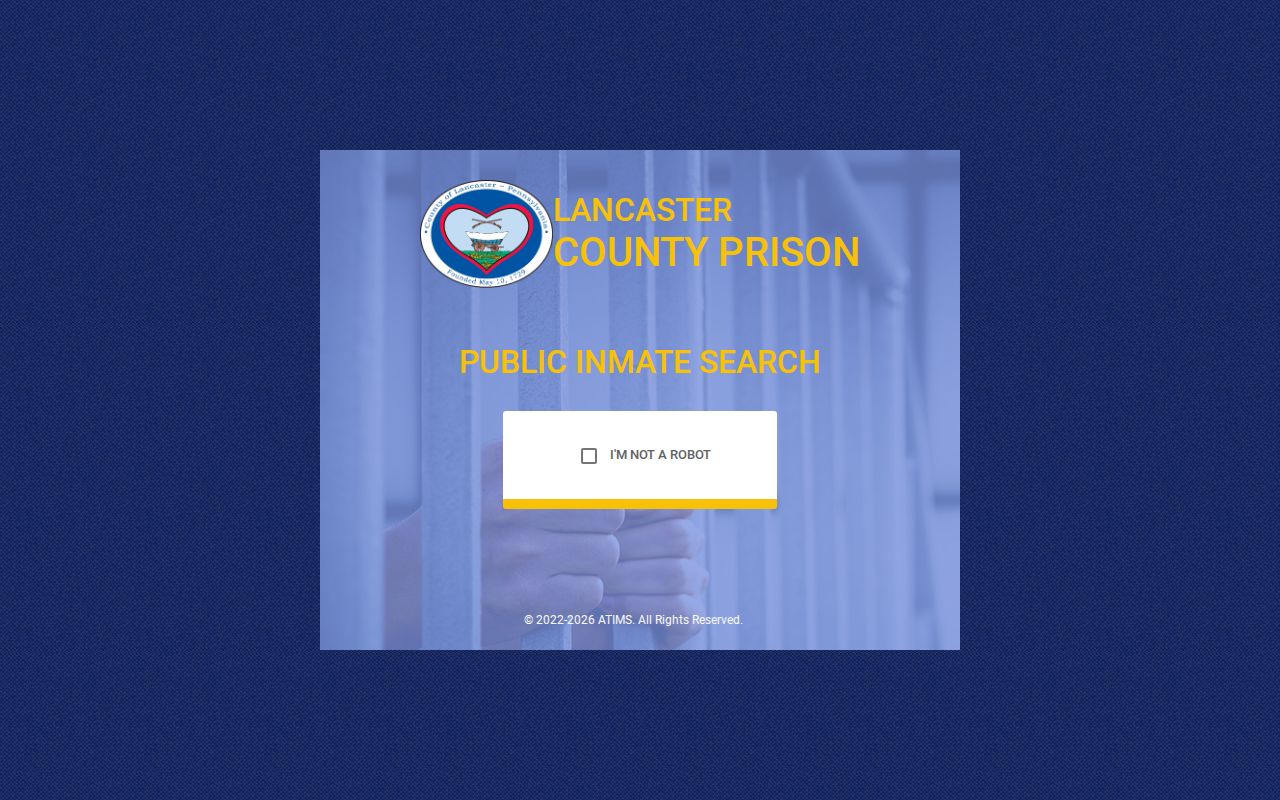
The result is limited to current custody information and does not replace a court file or a criminal-history record.
The Pennsylvania DOC locator provides separate fields for names, inmate or parole number, committing county, location, and either date of birth or approximate age.
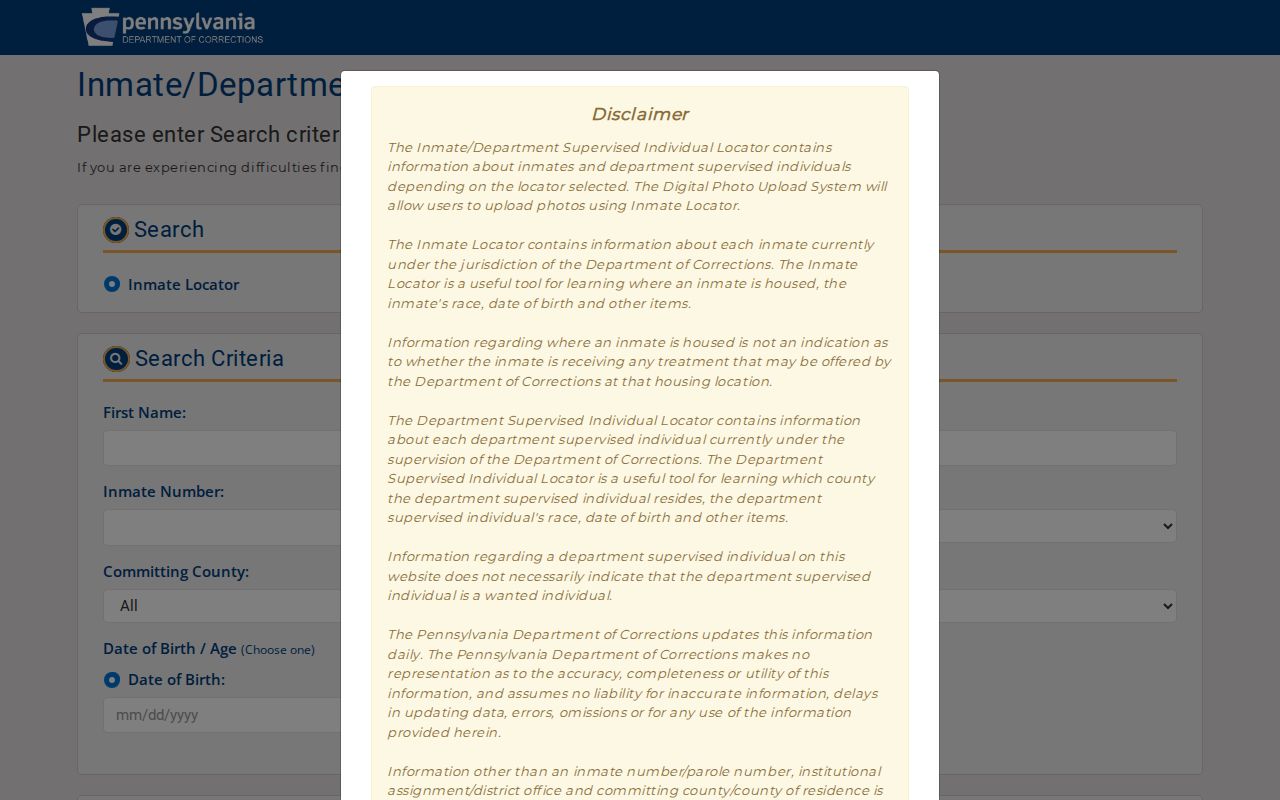
A last-name search is the state-recommended first step when results are difficult, but the daily-updated locator still excludes custody outside its jurisdiction.
The Pennsylvania State Police Megan's Law website publishes its terms and search entry for covered registrants.
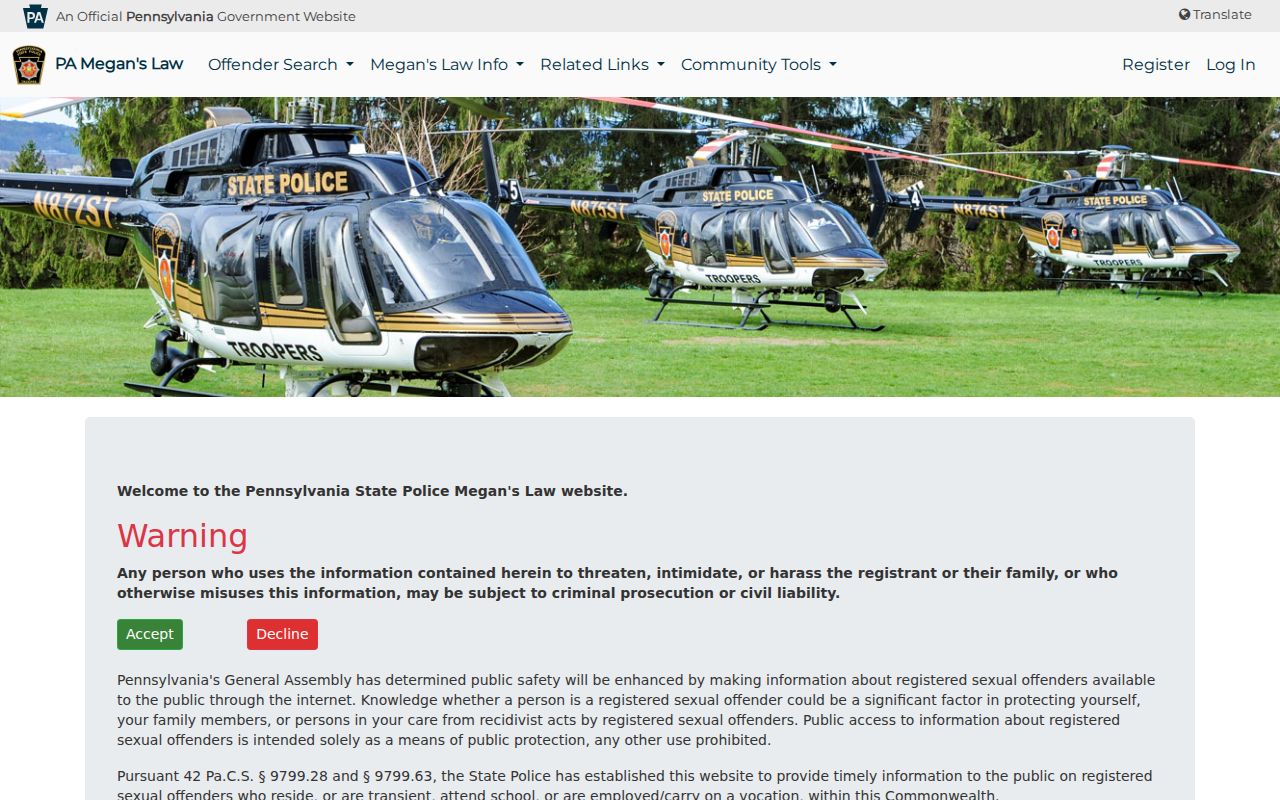
The registry warns that it is not a complete lifetime list and that fingerprint comparison is the only positive identification. Threats, intimidation, and harassment are prohibited.
Lancaster Name Match Limits
A common myth is that an assessed owner, a mailed tax notice, or a single online result proves who lives at a Lancaster address. It does not. The assessment system may show an owner correspondence address that is a post-office box, office, fiduciary address, or another property. The situs address identifies land or a building, not every person connected to it. A court case can also involve an old address, another person with the same name, or a party role unrelated to current residence.
Use an official source for the limited fact it actually records. For a credential or entity connection, PALS and Pennsylvania business filings can corroborate a license or recorded affiliation, subject to update lag and their stated limits. They are not address proof. A carefully labeled uncertainty is more useful than a confident but unsupported match.
Lancaster Record Request Fallbacks
When the online trail stops, ask the office that keeps the identified record. Lancaster County Archives requests work best with a name, timeframe, record type, and index reference. Court files belong with the appropriate clerk or records manager. Vital Records uses eligibility forms rather than an open search. A properly framed request under the Pennsylvania Right-to-Know Law seeks an existing agency record, not an answer to a question or access to confidential material.
Under the RTKL, 65 P.S. §§67.101-67.3104, an agency generally responds in writing within five business days, or invokes a stated 30-calendar-day extension. Court records use their own public-access policy and Rule 509 channel. For a historical Lancaster item, LancasterHistory and County Archives are often more useful than a general request because their collections and indexes identify the material sought.
Recorder coverage also changes with time. Its online deed search begins with records from 1981, recorder microfilm bridges 1808 through 1980, and the County Archives keeps deeds and indexes from 1729. A missing web index hit can therefore mean the search needs another era and custodian, rather than that the person or transfer did not exist.
Lancaster Resident Lookup Limits
Pennsylvania records can be public without becoming a free-to-use profile of a person. The RTKL has exemptions, court files have separate access rules, and vital records remain closed until their statutory age. The state voter self-status tool is for an individual's registration check, while voter list products require a signed request and carry use and publication restrictions. A missing address or record may reflect redaction, a protected status, a jurisdictional limit, or an ordinary error.
Lawful use. Use Lancaster records for personal, lawful research, family history, civic questions, or a specific matter. Do not use them to stalk, harass, intimidate, pressure, or expose anyone.
Pennsylvania's Address Confidentiality Program allows qualifying participants to use a substitute mailing address in many public systems. A missing home address can be a safety measure, not a data error. Questions about an incorrect official entry belong with the Assessment office, Recorder, clerk, voter-registration office, or Vital Records custodian that created the record.